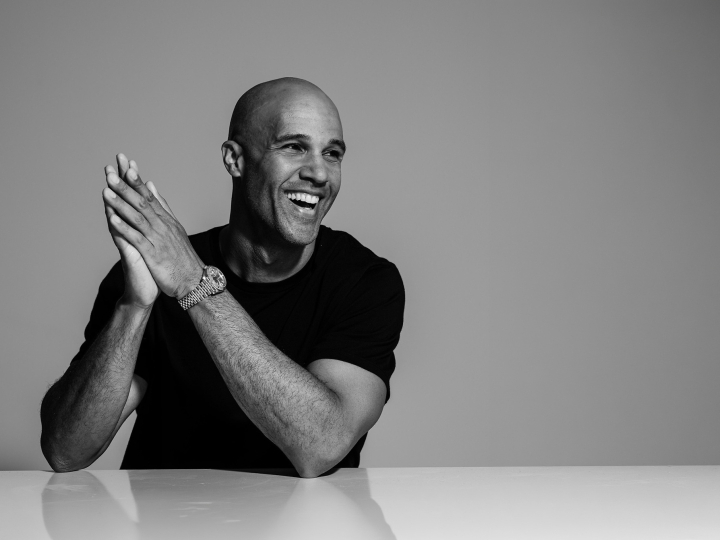
Juliet King '18, Biology
March 18, 2026
Juliet King '18 is in the final year of her doctoral studies in developmental biology at the University of North Carolina at Chapel Hill. Photo by Alejandro Vazquez
When mutated, more than 200 genes can cause cleft palate in humans, making it one of the most common birth defects worldwide. Scientists know many of the genetic mutations involved, but what those mutations actually do inside developing tissues — at the cellular level — remains less understood.
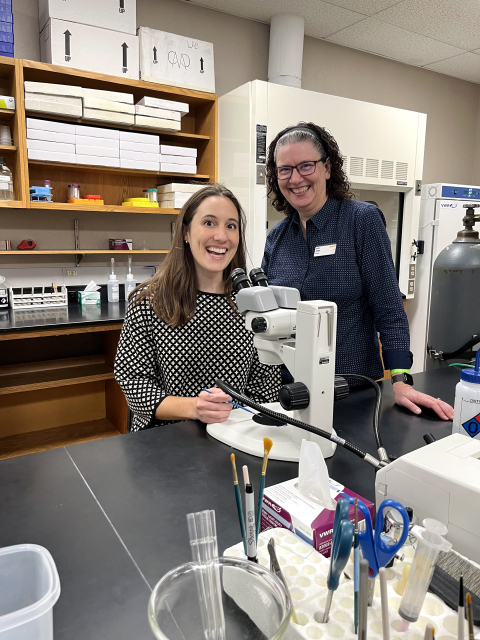
Juliet King ’18 (left) reunited with her mentor Professor Julie Gates, biology, during Homecoming Weekend 2025. Photo by Suzanne King
Juliet King '18 is working to close that gap. Now in the final year of her doctoral studies in developmental biology at the University of North Carolina at Chapel Hill, she investigates how genetic changes in skin cells disrupt the processes that shape the palate during development — research that could ultimately point toward new therapeutic approaches.
King's work has earned national recognition. She recently received a prestigious National Research Service Award Fellowship from the National Institutes of Health (NIH).
King's interest in science began long before graduate school. In high school, she was drawn to medicine after watching her brother undergo six years of cancer treatment. At Bucknell, her path shifted from pre-med to research when she joined Professor Julie Gates' biology lab. There, King studied the protein Ras in fruit flies — a molecule that, when mutated, is one of the most common drivers of cancer in humans. "It felt like I was contributing in a small way to something larger," she says.
Her accomplishments earned her recognition as one of the Bucknell Alumni Association's 2025 30 Under 30 honorees. (Bucknell alumni are invited to nominate classmates for the 2026 recognition.)
Where does your interest in scientific research come from?
My brother, Tim, had cancer growing up, so I spent a lot of time in and out of the hospital as a kid. That gave me early exposure to medicine. Tim actually participated in a clinical trial for a leukemia drug at the NIH, and I remember sitting in on a disclosure meeting with the researchers. They were explaining how the drug interacted with lysosomes — organelles inside cells.
I was taking AP Biology at the time, and I was fascinated that I could understand even a little of what they were talking about. I also grew up in Bethesda, Md., where the NIH is located, so I was surrounded by research before I even really knew what it was.
What class or professor from Bucknell had a lasting impact on your career?
Dr. Julie Gates, a biology professor, was my academic adviser and research mentor, and she probably deserves the majority of the credit for my scientific career.
Like many biology majors, I initially thought I would pursue a pre-med path, but I soon realized that wasn't what I wanted. Dr. Gates encouraged me to try biomedical research, and I joined her fruit fly lab at the start of my junior year. I continued working there through graduation, including the summer between my junior and senior years — and I loved it. It felt like I was contributing, even in a small way, to something larger. I also really enjoyed the hands-on aspect of the work — using microscopes and transferring fruit flies between vials. That summer I was working 40 hours a week in the lab and realized, "Oh, I can do this as a job."
Dr. Gates also helped me find a research position at Duke University after graduation, where I spent two years gaining insight into what it's like to work in a research environment with more resources. That experience ultimately helped me decide to pursue graduate school.
Beyond research, the faculty in the biology department were always welcoming and encouraging, which made me feel like I belonged. Professors at Bucknell expect a lot from you, but the smaller class sizes mean you receive more individual attention and focused training. In my first couple of years of graduate school, I felt very well prepared because of the standard Bucknell had set.
How did you transition from cancer research to cell and developmental research?
Cancer occurs when many different mutations accumulate in DNA, allowing cells to grow uncontrollably and invade other tissues. Interestingly, many of the genetic pathways disrupted in cancer are the same ones our bodies use to build tissues during development. In that sense, cancer biology and developmental biology are two sides of the same coin.
Based on previous research in my lab, we know that mutations in genes expressed in the skin can cause cleft palate. But beyond identifying those genes, there's still a lot we don't understand.
As a cell and developmental biologist, I analyze genetic information to understand how those mutations affect interactions between cells and proteins as tissues form. My work helps bridge the gap between identifying a genetic mutation and understanding how it ultimately affects the way our bodies develop.
What is the most rewarding part of conducting research?
The more time I've invested in my scientific career, the more I've transitioned from being a student to being a colleague. That's been one of the most exciting parts of reaching the end of my graduate training. I'm now interacting with other researchers as someone who has spent more than five years studying a specific topic.
As a student, you read a lot of scientific papers. Then you go to conferences and realize the people who wrote those papers are attending your presentation and asking about your research. I totally fan-girl the whole time.
My undergraduate research focused on the Ras protein, and the researcher who first characterized the cancerous function of mutated human RAS is actually at UNC. In graduate school, I took a course on this class of proteins with researchers in the field — the same people who wrote the papers I read as an undergraduate. That was a really cool full-circle moment. It's amazing to now be in conversation with the people I learned from during my undergraduate studies.