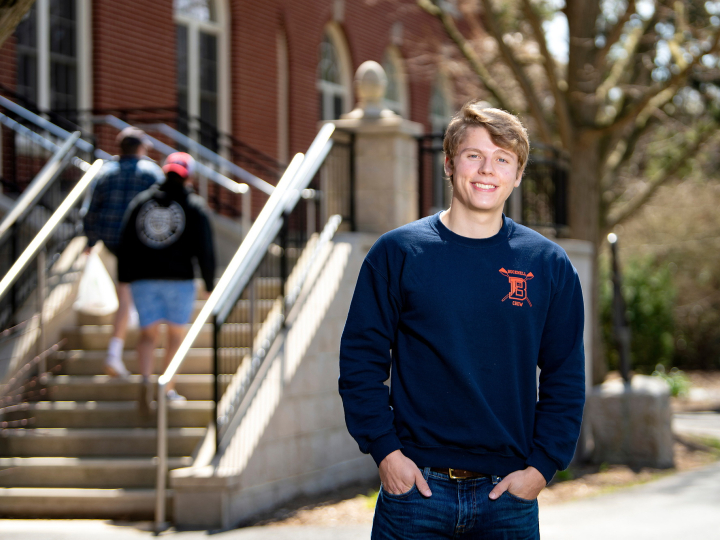
Stephen Leslie '18, Biomedical Engineering
April 14, 2026
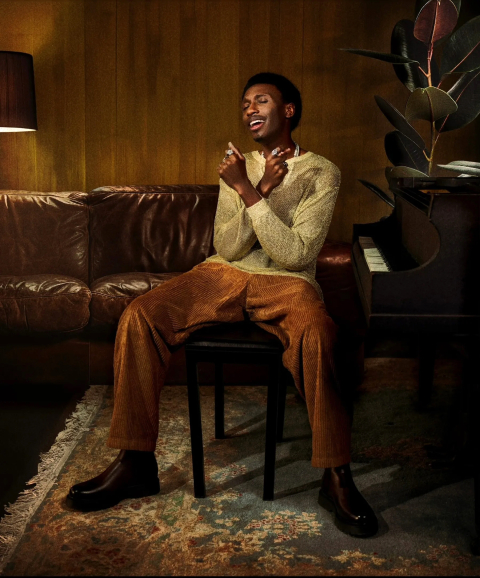
Stephen Leslie '18 is channeling his training as an engineer into a musical career. Photo by Jermaine Gibbs
Stephen Leslie '18 is making his mark both as a biomedical engineer and as a musical artist and producer who performs under the name Steven Thad, blending his technical knowledge with a love for music. His latest single, "Smile," was released worldwide Feb. 28, 2025, and he's currently working with Grammy-nominated producer, Dana Soréy, to finish his soul album.
By day, Leslie works as a senior device design engineer in Germantown, Md., where he develops and designs auto-injector medication delivery systems, a role that requires precision and attention to detail. Those qualities are carried into his music.
His accomplishments earned him recognition as one of the Bucknell Alumni Association's 2025 30 Under 30 honorees. (Bucknell alumni are invited to nominate classmates for the 2026 recognition.)
How would you describe your music style?
I'd describe my style as eclectic. I grew up listening to '90s and '00s gospel, which was technically diverse and shaped my ear. But at Bucknell, I discovered pop, R&B and hip-hop — thanks to peers and communities like 7th Street House, Posse and the Black Student Union. That combination of gospel roots and broader influences helped me cultivate the artist I am today.
What experience at Bucknell had the biggest impact on your career?
Joining the a cappella group Two Past Midnight was a transformative experience. I hadn't planned to sing in college, but auditioning opened the door to learning arrangement, harmony and collaboration. My gift was really sharpened by the talented people in that group. Bucknell's Engineering Success Alliance was crucial to my growth as an engineer.
How did you continue to pursue music after graduating? What obstacles do you face as an artist?
After graduation, I focused on understanding my aspirations. Dana Soréy, a Grammy-nominated producer and family friend, mentored me, giving me hands-on experience with production softwares like Reason 11 and Adobe Premiere. He showed me the importance of approaching challenges with joy and curiosity, a mindset I carry into my own music career.
What connections do you see between engineering and producing music?
Engineering trained me to analyze scenarios meticulously — a skill that translates directly to producing music. I think in terms of levels, compression and panning, asking questions like, "How loud should this vocal be relative to the background?" or "How far do I want to pan the bass?" My engineering background gives me confidence in the technical precision of my work.
What do you want people to walk away with after listening to your music?
I want listeners to feel my emotion but also foster their own interpretation. If my music can transport someone, captivate them enough to dream or imagine, that's the ultimate reward as an artist.